When Is Scoliosis Bracing Recommended?
A scoliosis diagnosis can be overwhelming, particularly for children, teenagers and their parents who are trying to understand the available treatment options. One of the most common questions following a diagnosis is whether scoliosis bracing is necessary and when treatment should begin.
Scoliosis is a condition that causes the spine to develop an abnormal sideways curvature, sometimes accompanied by rotation. While some spinal curves remain relatively stable, others can become more severe, particularly during periods of rapid growth.
Scoliosis bracing is a non-surgical treatment designed to help prevent spinal curvature from progressing. It is most commonly recommended for children and adolescents who have moderate scoliosis and still have significant growth remaining.
However, not everyone diagnosed with scoliosis needs a brace. Factors such as curve severity, age, skeletal maturity and the likelihood of progression all influence treatment recommendations.
In this guide, we explore when scoliosis bracing is recommended, who may benefit from treatment and what patients can expect throughout the bracing process.
What Is Scoliosis Bracing?
When Is Scoliosis Bracing Recommended?
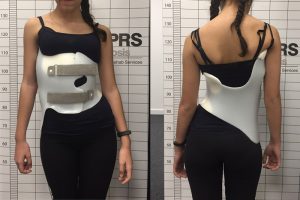
Scoliosis bracing is a non-surgical treatment that involves wearing a specially designed medical device around the torso. The brace applies targeted pressure to specific areas of the body to help manage spinal curvature while the patient continues to grow.
Unlike traditional back supports, scoliosis braces are designed to address the three-dimensional nature of spinal deformity, including sideways curvature and rotation.
The main objective of bracing is to reduce the risk of the spinal curve becoming more severe during growth. Although a brace may improve spinal alignment while being worn, its primary purpose is curve progression management rather than guaranteeing permanent correction.
Bracing is generally recommended for growing patients whose spinal curves are at risk of progressing to a more severe level.
When Is Scoliosis Bracing Recommended?
Scoliosis bracing is typically recommended when a patient has a moderate spinal curve and still has substantial growth remaining.
Healthcare professionals consider several factors before recommending treatment. These include the size of the spinal curve, the patient’s age, skeletal maturity and whether previous assessments show signs of progression.
For adolescents with idiopathic scoliosis, bracing is commonly considered when spinal curves measure approximately 25 to 40 degrees and the patient has not reached skeletal maturity.
However, these measurements are general guidelines rather than strict rules. Individual treatment recommendations depend on the patient’s clinical circumstances.
1. When the Spinal Curve Measures Between 25 and 40 Degrees
One of the main factors influencing the decision to recommend scoliosis bracing is the degree of spinal curvature.
The Cobb angle is used to measure the size of a spinal curve on an X-ray. It helps healthcare professionals assess scoliosis severity and monitor changes over time.
In general:
Curves below approximately 20 degrees may only require regular monitoring.
Curves between approximately 20 and 25 degrees may require closer observation, particularly if progression is occurring or significant growth remains.
Curves between approximately 25 and 40 degrees are commonly considered for bracing in growing adolescents.
Larger curves may require specialist assessment to discuss additional treatment options, including surgery.
These ranges are not universal treatment rules. The patient’s growth stage, curve pattern and progression risk must also be considered.
2. When the Patient Is Still Growing
Growth is one of the most important considerations when determining whether scoliosis bracing is appropriate.
Children and teenagers who are still developing have a higher risk of curve progression, particularly during puberty and periods of rapid growth.
Bracing is most effective when used before skeletal maturity, while there is still an opportunity to influence the progression of the spinal curve.
Healthcare professionals may use physical examinations and skeletal maturity assessments to determine how much growth remains.
3. When the Spinal Curve Shows Signs of Progression
Some scoliosis curves remain stable over time, while others gradually become more severe.
If regular assessments show that a spinal curve is increasing, healthcare professionals may recommend bracing to help manage further progression.
A change of approximately five degrees or more on comparable X-rays is commonly considered clinically significant, although measurement variation and the overall clinical picture must be considered.
Early identification of progression allows healthcare professionals to evaluate whether bracing is an appropriate treatment option.
Which Patients Are Most Likely to Benefit From Scoliosis Bracing?
Although scoliosis can affect people of different ages, bracing is most commonly used for children and adolescents with idiopathic scoliosis.
The treatment is particularly beneficial for patients who have moderate curves and are still experiencing significant physical development.
Children Approaching Puberty
Children approaching puberty may experience rapid growth, which can increase the risk of scoliosis progression.
If a spinal curve is identified during this stage, healthcare professionals may recommend closer monitoring or bracing depending on its severity and the patient’s remaining growth.
Teenagers With Adolescent Idiopathic Scoliosis
Adolescent idiopathic scoliosis is one of the most common reasons for prescribing a scoliosis brace.
It generally develops around the beginning of adolescence, often without a clearly identifiable cause.
For teenagers with moderate curves who have not reached skeletal maturity, bracing can help reduce the risk of further spinal curvature.
Patients With a Family History of Scoliosis
A family history of scoliosis may increase the likelihood of developing the condition.
However, having a family history does not automatically mean that bracing will be required.
Regular screening and professional assessment can help identify spinal curvature early and determine whether treatment is necessary.
When Is Scoliosis Bracing Not Usually Recommended?
Not everyone with scoliosis requires bracing. In some circumstances, observation or alternative treatment approaches may be more appropriate.
Very Mild Spinal Curves
Patients with mild scoliosis generally do not require immediate bracing.
Curves below approximately 20 degrees are often monitored through regular clinical assessments, particularly when there are no signs of progression.
The purpose of monitoring is to identify any changes that may require treatment in the future.
Patients Who Have Reached Skeletal Maturity
Bracing is generally less effective at preventing curve progression once a patient has completed most of their skeletal growth.
Adults with scoliosis may have different treatment needs, including symptom management, physical therapy or specialist assessment.
However, selected adults may still benefit from bracing for additional support or pain management.
Severe Spinal Curves
Patients with severe spinal curvature may require a more comprehensive treatment assessment.
When curves become significantly larger, bracing alone may not be sufficient to manage the condition.
Depending on the patient’s age, symptoms and curve characteristics, a specialist may discuss surgical treatment options.
How Does a Scoliosis Brace Help Prevent Curve Progression?
A scoliosis brace works by applying corrective pressure to specific areas of the torso. These pressure points are designed to counteract the sideways bending and rotation associated with scoliosis.
The brace also includes expansion areas that allow other parts of the torso to move into a more favourable position.
Supporting Spinal Alignment
The corrective forces applied by the brace help manage spinal alignment while the patient grows.
The design is tailored to the individual’s curve pattern to ensure that pressure is applied to appropriate areas.
Reducing the Risk of Curve Progression
The primary goal of bracing is to reduce the likelihood of spinal curvature becoming more severe.
Research, including the Bracing in Adolescent Idiopathic Scoliosis Trial (BrAIST), has demonstrated that bracing can significantly reduce progression to the surgical threshold in appropriately selected adolescents.
Providing a Non-Surgical Treatment Option
For suitable patients, bracing offers an opportunity to manage scoliosis without surgery.
By reducing the risk of curve progression during growth, treatment may help some patients avoid reaching a severity where surgery would otherwise be considered.
How Long Should You Wear a Scoliosis Brace?
The recommended wearing schedule depends on the type of brace and the patient’s individual treatment plan.
Many traditional scoliosis braces are prescribed for approximately 18 to 23 hours per day. Nighttime braces follow a different schedule and are designed to be worn while sleeping.
Consistency is an important part of successful treatment. Research suggests that patients who wear their braces for the prescribed number of hours generally experience better outcomes.
Patients should follow their orthotist’s instructions and attend regular appointments to ensure the brace continues to fit correctly as their bodies develop.
What Happens After Scoliosis Bracing Is Recommended?
Once a healthcare professional determines that bracing is appropriate, the patient generally progresses through several treatment stages.
Initial Assessment and Treatment Planning
The process begins with an assessment of the spinal curve, physical development and medical history.
X-rays may be reviewed to measure the Cobb angle and determine the most appropriate brace design.
Custom Brace Fitting
An orthotist may take measurements or a digital scan of the patient’s torso to create a brace suited to their individual anatomy.
During the fitting appointment, the brace is checked for comfort, positioning and appropriate corrective pressure.
Ongoing Monitoring and Adjustments
Regular follow-up appointments are important throughout treatment.
As children grow, their bodies change, which means the brace may require adjustments or replacement.
Healthcare professionals also monitor spinal curvature to determine whether the treatment is achieving its intended goals.
Conclusion: Knowing When to Start Scoliosis Bracing
Scoliosis bracing is most commonly recommended for growing children and teenagers with moderate spinal curvature who have a significant risk of further progression.
The decision to begin treatment depends on several factors, including the Cobb angle, age, skeletal maturity and changes in spinal curvature over time.
Starting treatment at the appropriate stage can help reduce the risk of curve progression and provide a valuable non-surgical management option.
If your child has been diagnosed with scoliosis, consulting an experienced healthcare professional or orthotist is an important first step. A thorough assessment and individualised treatment plan can help determine whether scoliosis bracing is appropriate and support the best possible outcome throughout the growth and development process.