The Science Behind Modern Prosthetic Legs
Introduction: Understanding the Evolution of Prosthetic Leg Technology
Modern prosthetic legs represent the combination of medical science, engineering, biomechanics, and advanced technology. What was once a simple mechanical replacement has evolved into a sophisticated mobility solution designed to replicate natural movement, improve comfort, and support a wide range of activities.
The science behind modern prosthetic legs focuses on understanding how the human body moves and creating devices that can work in harmony with the user’s remaining muscles, joints, and movement patterns. Engineers and researchers study walking mechanics, balance, weight distribution, and energy transfer to develop prosthetic systems that feel more natural and responsive.
Today’s advanced prosthetic legs use lightweight materials, smart sensors, computerized systems, and robotic components to provide greater control and flexibility. These innovations are helping people with limb loss achieve improved mobility and independence while opening new possibilities for the future of prosthetic design.
The Biomechanics Behind Natural Movement
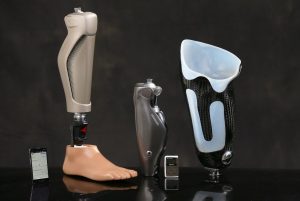
The Science Behind Modern Prosthetic Legs
How the Human Leg Moves
The human leg is a complex biological system involving bones, muscles, tendons, joints, and nerves working together to create movement. Walking requires precise coordination between the hip, knee, ankle, and foot. Each part contributes to balance, stability, and forward motion.
Modern prosthetic leg design begins with studying these natural processes. Scientists analyze how people walk, how forces move through the body, and how the foot interacts with different surfaces. This research helps engineers create prosthetic components that imitate the functions of natural limbs.
A successful prosthetic leg must do more than support body weight. It must also help users maintain balance, absorb impact, and adjust to changing environments. Understanding biomechanics allows designers to develop devices that better match the body’s natural movement patterns.
The Importance of Weight Distribution and Balance
Balance is one of the most important factors in prosthetic leg performance. When a person walks, their body constantly shifts weight between different points of contact. A prosthetic leg must respond to these changes to provide stability and reduce strain.
Advanced prosthetic systems use specialized designs to improve weight distribution. Components such as flexible feet, adaptive joints, and shock-absorbing materials help manage forces created during walking.
By improving balance and movement efficiency, modern prosthetic legs can help users walk more comfortably and reduce the risk of fatigue caused by unnatural movement patterns.
The Materials Used in Modern Prosthetic Legs
Lightweight and Durable Components
Material science plays a major role in the development of modern prosthetic legs. Early prosthetics were often made from heavy materials that limited comfort and movement. Today, engineers use advanced materials that provide strength while keeping devices lightweight.
Carbon fiber is one of the most common materials used in modern prosthetic technology. It is strong, flexible, and capable of storing and releasing energy during movement. This makes carbon fiber components especially useful for prosthetic feet designed to support walking and running.
Other materials, including titanium, advanced polymers, and specialized composites, are used to create durable components that can withstand daily activities while remaining comfortable for users.
Designing Prosthetics for Comfort
Comfort is a major focus of modern prosthetic research. A prosthetic leg must fit securely while minimizing pressure points and discomfort. Prosthetists use customized sockets and advanced fitting techniques to create better connections between the user’s body and the device.
Digital scanning and computer-assisted design are increasingly used to improve accuracy. These technologies allow specialists to create personalized components based on an individual’s anatomy and movement needs.
The Role of Sensors and Smart Technology
Creating Responsive Prosthetic Systems
One of the biggest advancements in prosthetic science is the introduction of smart technology. Modern prosthetic legs can include sensors that collect information about movement, pressure, speed, and positioning.
These sensors allow the device to respond to changes in real time. For example, a smart prosthetic knee can detect whether a user is walking, standing, sitting, or climbing stairs and adjust its behavior accordingly.
This responsiveness creates a smoother experience and allows users to navigate different environments with greater confidence.
Microprocessor-Controlled Prosthetic Legs
Microprocessor-controlled prosthetic legs use computer systems to manage movement. These devices analyze data from sensors and make rapid adjustments to improve stability and control.
A computerized knee system, for example, can adjust resistance during different phases of walking. This helps prevent unexpected movements and provides a more natural walking pattern.
Although these systems are more complex than traditional prosthetics, they represent a significant advancement in mobility technology by allowing prosthetic devices to adapt to individual needs.
The Science of Powered and Robotic Prosthetic Legs
Using Motors to Assist Movement
Powered prosthetic legs represent the next stage in prosthetic development. Unlike passive devices that rely mainly on the user’s movement, powered systems use motors and electronic controls to provide additional assistance.
These robotic components can help with movements that require more energy, such as climbing stairs or standing from a seated position. By providing active support, powered prosthetics may reduce the physical effort required from users.
Researchers continue to improve motor technology, aiming to create systems that are smaller, quieter, and more efficient.
Artificial Intelligence and Adaptive Learning
Artificial intelligence is becoming an important part of modern prosthetic research. AI-powered systems can analyze movement patterns and learn how users interact with their prosthetic devices.
Over time, intelligent prosthetics may adjust automatically based on personal habits, walking styles, and environmental conditions. This personalized approach could make prosthetic legs more comfortable and effective for individual users.
The Future of Prosthetic Leg Innovation
Neural Interfaces and Mind-Controlled Prosthetics
One of the most exciting areas of prosthetic research involves connecting devices directly with the nervous system. Neural interface technology explores how electrical signals from the brain and nerves can be used to control artificial limbs.
Future developments may allow users to control prosthetic legs more naturally through their own intentions. Researchers are also exploring sensory feedback systems that could help users experience information about pressure, movement, and contact with surfaces.
Personalized Prosthetics Through Advanced Technology
The future of prosthetic legs is moving toward greater personalization. Advances in artificial intelligence, 3D printing, robotics, and digital manufacturing are allowing devices to be designed specifically for each user’s lifestyle and physical needs.
Instead of creating standard solutions, future prosthetics may continuously adapt and evolve alongside the person using them. This approach could improve comfort, functionality, and long-term mobility outcomes.
Conclusion: The Science Driving a New Era of Mobility
The science behind modern prosthetic legs combines human biology with advanced engineering to create devices that are more capable than ever before. Through biomechanics research, innovative materials, smart sensors, robotics, and artificial intelligence, prosthetic technology continues to move closer to replicating natural movement.
Modern prosthetic legs are not simply replacements for missing limbs. They are carefully engineered systems designed to support independence, improve quality of life, and expand what people can achieve.
As research continues, future prosthetic technologies may become even more intuitive, personalized, and connected with the human body. The science behind these innovations represents a powerful step toward a future where mobility possibilities continue to grow.