The Role of Sensors and AI in Advanced Prosthetic Legs
Introduction: The Rise of Intelligent Prosthetic Technology
Advanced prosthetic legs have undergone remarkable transformation in recent years. Once designed primarily as mechanical replacements for missing limbs, modern prosthetic systems are becoming intelligent devices capable of adapting to the needs and movements of individual users. Two technologies driving this evolution are sensors and artificial intelligence (AI).
Sensors provide prosthetic devices with the ability to collect information about movement, pressure, balance, and environmental conditions. Artificial intelligence processes this information, allowing the prosthetic leg to make decisions and adjust its performance in real time. Together, these technologies are creating prosthetic solutions that are more responsive, comfortable, and personalized than ever before.
The combination of sensors and AI is helping bridge the gap between traditional prosthetics and natural human movement. While current technology cannot completely replicate the complexity of a biological limb, these innovations are bringing advanced prosthetic legs closer to providing intuitive and adaptive mobility.
Understanding the Importance of Sensors in Prosthetic Legs
How Sensors Collect Movement Data
Sensors are essential components in advanced prosthetic legs because they allow the device to understand what the user is doing. These small electronic systems collect information from different parts of the prosthetic, including joint position, walking speed, pressure levels, and movement direction.
When a person walks, their body constantly adjusts to changes in terrain, balance, and speed. Sensors help capture these adjustments and provide valuable information to the prosthetic control system. For example, a sensor may detect whether a user is walking on a flat surface, climbing stairs, or moving across uneven ground.
This continuous flow of information allows modern prosthetic legs to respond more effectively to different situations. Instead of operating with fixed settings, sensor-enabled prosthetics can adjust their behavior based on real-time data.
Types of Sensors Used in Advanced Prosthetic Systems
Different types of sensors contribute to the functionality of modern prosthetic legs. Motion sensors measure acceleration and movement patterns, helping the system understand how the user is moving. Position sensors monitor joint angles, allowing the prosthetic to adjust knee and ankle movements.
Pressure sensors are also important because they measure how weight is distributed during walking. This information helps improve balance and stability by ensuring the prosthetic responds appropriately to changes in force.
Some advanced systems also use environmental sensors that help identify external conditions. These sensors can support adjustments when users encounter different surfaces, slopes, or obstacles.
The Role of Artificial Intelligence in Prosthetic Leg Development
Using AI to Understand Human Movement
Artificial intelligence allows prosthetic legs to process large amounts of information and make decisions based on patterns. Instead of simply following programmed instructions, AI-powered systems can analyze movement data and adapt their responses.
Every person has a unique walking style influenced by factors such as body structure, activity level, and lifestyle. AI technology can recognize these individual patterns and help customize how a prosthetic leg functions.
For example, an AI system may learn how a user walks during daily activities and adjust the prosthetic’s response to provide improved comfort and efficiency. This personalized approach helps create a more natural experience.
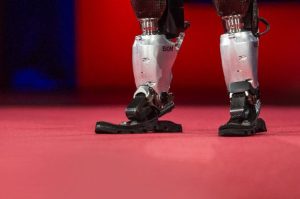
The Role of Sensors and AI in Advanced Prosthetic Legs
Machine Learning and Continuous Improvement
Machine learning is a branch of AI that allows systems to improve over time. In advanced prosthetic legs, machine learning algorithms can analyze repeated movement patterns and identify ways to optimize performance.
As users interact with their prosthetic devices, the system gathers information about their habits and preferences. Over time, the technology can refine its responses, creating a device that becomes better adapted to the individual.
This ability to learn is one of the most important differences between traditional prosthetics and next-generation intelligent prosthetic systems.
How Sensors and AI Work Together
Real-Time Adjustments for Improved Mobility
The true power of advanced prosthetic technology comes from the combination of sensors and AI. Sensors provide the data, while AI interprets that information and determines the appropriate response.
For example, when a user begins walking downhill, sensors can detect changes in body position, speed, and pressure. The AI system then analyzes this information and adjusts the prosthetic knee or ankle to provide better control and stability.
These real-time adjustments help create smoother movement and reduce the amount of conscious effort required from the user.
Creating a More Natural Walking Experience
Natural walking involves thousands of small adjustments that happen automatically. Advanced prosthetic systems aim to replicate some of these automatic responses by combining intelligent software with responsive hardware.
AI-controlled prosthetic legs can help manage different phases of walking, including lifting the foot, supporting body weight, and transitioning between steps. This can improve comfort and reduce the physical strain associated with using a prosthetic device.
Benefits of AI and Sensor-Based Prosthetic Legs
Greater Comfort and Personalization
One of the greatest advantages of intelligent prosthetic technology is personalization. Since every user’s needs are different, a prosthetic leg that adapts to individual movement patterns can provide a better experience.
Sensors and AI allow devices to adjust based on the user’s activities, whether they are walking, exercising, working, or navigating different environments. This adaptability can improve comfort and make the prosthetic feel more natural.
Improved Stability and Safety
Balance is a major challenge for many prosthetic users. Intelligent prosthetic systems can help improve stability by quickly responding to unexpected changes in movement.
For example, if a user steps onto an uneven surface, sensors can identify the change and AI can adjust the prosthetic response. These rapid corrections may reduce the risk of instability and provide greater confidence during daily activities.
Increased Independence
The goal of advanced prosthetic technology is to help users achieve greater independence. By making movement easier and more predictable, AI-powered prosthetic legs can support participation in more activities.
Improved mobility can positively influence daily routines, work opportunities, recreation, and overall quality of life.
Challenges in Developing AI-Powered Prosthetic Legs
Technical Complexity and Cost
Creating intelligent prosthetic legs requires advanced engineering, software development, and specialized materials. These factors can increase the complexity and cost of production.
Researchers continue working on ways to make these technologies more affordable and accessible while maintaining high performance and reliability.
Battery Life and System Efficiency
Because advanced prosthetic legs rely on electronic components, power management remains an important challenge. Sensors, processors, and motors require energy to function, making battery life a key consideration.
Future improvements in battery technology and energy-efficient designs may help create lighter and longer-lasting prosthetic systems.
The Future of Sensors and AI in Prosthetic Technology
Advanced Neural Connections
Future developments may involve connecting prosthetic systems more directly with the human nervous system. Neural interfaces could allow users to control prosthetic devices through signals from their brain or nerves.
Researchers are also exploring sensory feedback technologies that may allow users to receive information about touch, pressure, and movement from their prosthetic limbs.
Smarter and More Adaptive Prosthetic Solutions
As AI technology continues to advance, prosthetic legs may become increasingly intelligent and responsive. Future systems could continuously learn from users and adapt throughout their lives.
The next generation of prosthetics may not only restore mobility but also provide a more integrated connection between humans and technology.
Conclusion: A Smarter Future for Mobility
Sensors and artificial intelligence are transforming the way advanced prosthetic legs are designed and used. By collecting detailed movement information and using intelligent systems to respond, these technologies are creating more adaptive and personalized mobility solutions.
Although challenges remain, the continued development of AI and sensor technology is bringing prosthetic legs closer to natural movement. The future of prosthetics is moving toward devices that understand users, adapt to their needs, and provide greater freedom of movement.
Through innovation in engineering, robotics, and artificial intelligence, advanced prosthetic legs are opening new possibilities for independence and mobility around the world.