Microprocessor Knee vs. Mechanical Knee: Which Is Right for You?
Choosing the right prosthetic knee is an important decision for anyone living with an above-knee or transfemoral amputation. The knee component can influence stability, walking ability, confidence, comfort, and how easily you manage everyday activities.
Two common options are mechanical knees and microprocessor knees. While both are designed to provide stability and support during walking, they use very different technologies to control movement.
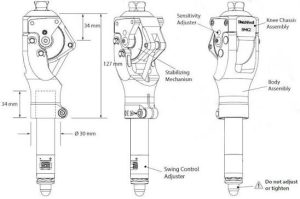
Microprocessor Knee vs. Mechanical Knee: Which Is Right for You?
A mechanical knee relies on physical mechanisms such as hydraulic, pneumatic, friction, or locking systems. A microprocessor knee uses sensors and a computer-controlled system to continuously adjust the knee’s resistance as you move.
So, which option is right for you? The answer depends on your mobility level, lifestyle, goals, environment, budget, and individual needs. Understanding the differences can help you have a more informed conversation with your prosthetist.
What Is a Mechanical Prosthetic Knee?
A mechanical prosthetic knee uses physical components to control how the knee moves. Depending on the design, this may include friction control, hydraulic or pneumatic resistance, weight-activated mechanisms, or locking systems.
These knees have been used successfully for many years and can offer reliable performance without the electronics and sensors found in a microprocessor knee.
Benefits of Mechanical Knees
Mechanical knees can have several advantages. They are generally simpler in design, which can make maintenance and servicing more straightforward. They also do not require electronic sensors or a battery to operate.
For some users, a mechanical knee may provide an appropriate combination of stability, function, durability, and value. Mechanical options can also be suitable for people with lower mobility requirements who primarily walk at consistent speeds on predictable surfaces.
However, mechanical knees generally cannot automatically adjust their behaviour in response to changes in walking speed or terrain in the same way that a microprocessor-controlled knee can.
What Is a Microprocessor Knee?
A microprocessor knee, often called an MPK, uses sensors, computer processing, and controlled resistance to respond to the user’s movements.
The system monitors factors such as movement and knee position and can adjust resistance during different phases of the walking cycle. This allows the knee to respond dynamically rather than relying entirely on a fixed mechanical setting.
Microprocessor knees are designed to help users manage changes in walking speed, slopes, uneven surfaces, and other everyday situations. Some models also include additional features designed to support activities such as sitting, standing, stair negotiation, or walking in more challenging environments.
Benefits of Microprocessor Knees
One of the major advantages of a microprocessor knee is its ability to adapt. Instead of providing the same mechanical response throughout every step, the knee can adjust its resistance according to the user’s movement.
Research has found that people using microprocessor knees may experience improvements in mobility, function, satisfaction, and certain measures of safety compared with non-microprocessor knees. Evidence has also reported fewer stumbles and falls in some groups of users.
For someone who regularly encounters uneven ground, changes walking speed, navigates busy environments, or wants greater confidence while walking, this adaptability can be particularly valuable.
Microprocessor Knee vs. Mechanical Knee: Key Differences
The biggest difference is how each knee controls movement.
A mechanical knee uses physical mechanisms and settings established during fitting and adjustment. A microprocessor knee uses sensors and computer-controlled adjustments to modify knee behaviour as the person moves.
Stability
Stability is an important consideration for anyone using a prosthetic knee. Some research has found improved balance and reduced stumbling or falling among users of microprocessor knees compared with mechanical alternatives.
This does not mean a microprocessor knee eliminates the risk of falling. Individual results depend on many factors, including strength, balance, socket fit, rehabilitation, walking technique, and the specific device.
Walking on Different Surfaces
Mechanical knees can work well in predictable environments, but adapting to slopes, uneven ground, and changes in walking speed may require more effort from the user.
Microprocessor knees are designed to adjust their response as conditions change. This may make activities such as walking outdoors, managing ramps, or moving between different surfaces easier for some users.
Walking Speed
A mechanical knee can be adjusted to accommodate a user’s typical walking pattern. However, changing speeds may require greater conscious control.
A microprocessor knee can respond to changes in movement and adjust resistance during the walking cycle. This can be useful for people who frequently vary their pace throughout the day.
Power and Charging
Mechanical knees do not require batteries or charging. This can be a significant advantage for people who prefer a simpler device or do not want to manage battery levels.
Microprocessor knees require a power source, and charging requirements vary between models. Users need to understand how long the battery lasts, how it is charged, and what happens if the battery becomes depleted.
Maintenance and Technology
Mechanical knees generally have fewer electronic components. Microprocessor knees contain sophisticated electronics, sensors, and computer-controlled systems, which can make servicing and technical support an important part of ownership.
This does not automatically make one option better than the other. It means that the practical requirements of each device should be considered alongside its benefits.
Who May Benefit From a Microprocessor Knee?
A microprocessor knee may be worth considering if you regularly walk in different environments or want a prosthetic knee that can respond to changes in your movement.
It may be particularly useful for people who walk at different speeds, encounter uneven surfaces, experience concerns about stability, or want to participate in a wider range of everyday activities.
Clinical guidance has suggested considering microprocessor knees for ambulatory individuals when reducing falls and improving satisfaction are important goals.
Who May Prefer a Mechanical Knee?
A mechanical knee may be appropriate for someone who has relatively consistent walking patterns and does not require the adaptive features of a microprocessor system.
Cost, access to charging, maintenance preferences, activity level, and the environments in which you normally walk can all influence the decision.
A simpler knee can sometimes meet a person’s needs effectively without the additional technology of an MPK.
Which Prosthetic Knee Is Right for You?
There is no single prosthetic knee that is best for everyone. The right choice should be based on your individual mobility, goals, physical abilities, daily environment, and clinical requirements.
Your prosthetist can assess your walking pattern and discuss which knee technologies may be appropriate. You may also be able to trial different components before making a final decision.
Questions to Ask Your Prosthetist
Before choosing a knee, consider asking:
What mobility level is this knee designed for?
How will it perform on slopes and uneven surfaces?
How does it respond when I change walking speed?
How often will it need charging or servicing?
What happens if the battery runs out?
What training will I need to use it safely?
What are the total costs of the device and ongoing maintenance?
Can I trial the knee before making a decision?
Making an Informed Decision
The choice between a microprocessor knee and a mechanical knee is ultimately about finding the right balance between function, technology, reliability, lifestyle, and cost.
Mechanical knees can provide dependable performance with a relatively simple design. Microprocessor knees offer greater adaptability and may provide advantages for stability, mobility, and confidence in a wider range of situations.
Research generally supports functional and quality-of-life benefits from microprocessor knees compared with non-microprocessor options, although results can vary between individuals and not every user needs the most technologically advanced device.
The best choice is the one that matches how you live and what you want to achieve with your prosthesis. A qualified prosthetist can help you compare suitable options, assess your mobility needs, and determine which technology is most appropriate for your circumstances.