Microprocessor Foot vs. Traditional Prosthetic Foot: Key Differences
Choosing the right prosthetic foot can make a meaningful difference to comfort, stability, mobility, and confidence. With advances in prosthetic technology, people with lower-limb amputation now have more options than ever, including traditional mechanical feet, energy-storing-and-return feet, and microprocessor-controlled feet.
A traditional prosthetic foot relies primarily on mechanical materials and components to provide support, cushioning, flexibility, and energy return. A microprocessor foot uses sensors and computer-controlled technology to adjust the foot’s behaviour as you move.
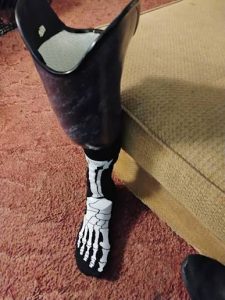
Microprocessor Foot vs. Traditional Prosthetic Foot: Key Differences
Understanding the differences between these technologies can help you have a more informed discussion with your prosthetist and identify an option that suits your lifestyle, mobility goals, and everyday environment.
What Is a Traditional Prosthetic Foot?
Traditional prosthetic feet are designed to provide a stable base of support while helping reproduce some of the functions of a natural foot and ankle. Depending on the design, they may use materials such as carbon fibre, rubber, foam, or other flexible components.
Many modern non-microprocessor feet are energy-storing-and-returning feet. These designs store energy as the foot loads during walking and release some of that energy as the user moves through the gait cycle. Research has shown that different prosthetic foot designs can influence walking mechanics, although improvements in energy efficiency vary depending on the individual and the walking conditions.
Advantages of Traditional Prosthetic Feet
One of the main benefits of a traditional foot is its relative simplicity. Because it does not depend on a computer or electronic sensors, there is no battery that needs regular charging.
Traditional feet can also be durable and suitable for a wide range of users. Different designs can be selected according to factors such as body weight, activity level, walking speed, footwear, and the user’s goals.
For people who mainly walk at a consistent speed and on predictable surfaces, a traditional prosthetic foot may provide an effective combination of stability, flexibility, and energy return.
What Is a Microprocessor Prosthetic Foot?
A microprocessor prosthetic foot, sometimes called a microprocessor-controlled ankle-foot prosthesis, uses sensors and computer-controlled technology to adjust its behaviour during movement.
Instead of relying solely on fixed mechanical properties, the device can monitor information about the user’s movement and make adjustments in real time. Modern microprocessor-controlled lower-limb prostheses use sensor information to adapt the behaviour of the prosthetic joint.
Some microprocessor feet are designed to adjust ankle position or resistance to help users manage changes in terrain, slopes, and walking conditions.
Advantages of Microprocessor Feet
The key advantage of a microprocessor foot is adaptability. A conventional foot may have a fixed mechanical response, whereas a microprocessor-controlled foot can change its response according to movement and environmental conditions.
Research examining microprocessor prosthetic feet has found potential benefits when negotiating slopes. Studies have also investigated their effects on standing and movement on inclined surfaces, suggesting that adaptive ankle technology can help address some of the challenges associated with fixed prosthetic ankle designs.
This adaptability can be particularly useful for people who regularly walk outdoors, encounter ramps or slopes, change walking speeds, or move across different surfaces throughout the day.
Microprocessor Foot vs. Traditional Foot: Key Differences
Although both types of prosthetic feet are designed to support walking, their underlying technologies are different.
Adaptability
A traditional prosthetic foot generally responds according to its physical construction, stiffness, alignment, and other mechanical characteristics. Once it has been fitted and adjusted, its response is relatively consistent.
A microprocessor foot can use sensors and computer-controlled adjustments to respond to changing conditions. This may provide greater adaptability when walking on slopes or uneven surfaces.
Walking on Slopes and Uneven Ground
Walking on level ground can be relatively predictable, but slopes and uneven surfaces can present additional challenges for people using prosthetic feet.
Traditional feet can accommodate these situations to varying degrees depending on their design. However, the foot itself may not actively adjust its ankle position.
Microprocessor-controlled feet are designed to provide greater adaptability. Research has specifically examined their ability to support users when walking up and down slopes, an area where conventional fixed-ankle designs can be more challenging.
Energy Return
Many traditional modern prosthetic feet use energy-storing-and-returning designs. These feet can store mechanical energy during part of the walking cycle and return it later.
Not all microprocessor feet work in exactly the same way. Some incorporate energy-storing materials alongside electronically controlled ankle movement, while more advanced powered systems may actively generate movement.
It is therefore important not to assume that every microprocessor foot will automatically reduce energy expenditure. A systematic review found that the effects of different prosthetic foot designs on metabolic energy expenditure depend on the specific foot and walking conditions.
Battery and Charging
A traditional mechanical foot does not require electronic power, which means there is no battery to charge.
Microprocessor feet require a power source to operate their electronic components. This means users need to follow the manufacturer’s charging and maintenance instructions and understand how the device behaves if its battery becomes depleted.
For some users, the benefits of electronic adaptability may outweigh the additional charging requirements. For others, the simplicity of a mechanical foot may be preferable.
Maintenance and Servicing
Traditional feet generally have fewer electronic components and may have simpler servicing requirements.
Microprocessor feet contain sensors, electronics, batteries, and other specialised components. Professional servicing and technical support may therefore be an important consideration.
Maintenance requirements vary considerably between products, so users should discuss expected servicing, warranties, battery life, and replacement components with their prosthetist.
Who May Benefit From a Microprocessor Foot?
A microprocessor foot may be worth considering for someone who wants greater adaptability during everyday mobility.
It may be particularly useful for people who regularly walk on slopes, uneven surfaces, or changing terrain. It may also be appropriate for community ambulators who frequently vary their walking speed and environment.
Clinical practice guidelines recommend considering energy-storing-and-returning feet for people capable of variable-speed or community ambulation, although the appropriate foot ultimately depends on individual assessment and clinical needs.
Who May Benefit From a Traditional Prosthetic Foot?
A traditional prosthetic foot can remain an excellent option for many users. Someone who primarily walks on level surfaces, has predictable mobility needs, or prefers a simpler device may find that a conventional or energy-storing foot meets their requirements.
Traditional does not necessarily mean outdated. Modern mechanical prosthetic feet can incorporate sophisticated materials and engineering and may provide excellent function for the right user.
How Do You Choose the Right Prosthetic Foot?
The best prosthetic foot is not necessarily the newest or most technologically advanced option. It is the one that matches your individual needs, mobility level, goals, environment, and comfort requirements.
Your prosthetist can assess factors such as your walking pattern, activity level, residual limb, balance, footwear, daily activities, and the surfaces you commonly encounter.
Questions to Ask Your Prosthetist
Before choosing a prosthetic foot, consider asking:
What type of foot is appropriate for my mobility level?
How will it perform on slopes and uneven surfaces?
Will I need to charge the device?
What maintenance will be required?
How does the foot respond to changes in walking speed?
Can I trial the foot before making a decision?
What are the expected costs of the device and ongoing servicing?
Making the Right Choice for Your Lifestyle
Microprocessor and traditional prosthetic feet each have potential advantages. A traditional foot can provide reliable mechanical function without batteries or electronic components, while a microprocessor foot can offer greater adaptability in changing environments.
The evidence does not suggest that one design is automatically the best choice for every person. Prosthetic foot selection should be individualised, because mobility needs, walking environments, physical abilities, and personal goals can differ significantly.
If you are considering a new prosthetic foot, speak with a qualified prosthetist about your daily activities and mobility goals. A professional assessment and, where available, a trial of different technologies can help determine whether a microprocessor-controlled foot or a traditional prosthetic foot is the better fit for you.