Mechanical vs. Stance-Control KAFOs: What’s the Difference?
A Knee-Ankle-Foot Orthosis, commonly known as a KAFO, is designed to provide support and stability to the knee, ankle and foot. KAFOs can help people who experience significant lower-limb weakness, instability or difficulty controlling their joints during standing and walking.
There are several KAFO designs available, and two important categories are mechanical KAFOs and stance-control KAFOs. While both can provide knee stability, they achieve this in different ways. Understanding the differences can help patients, families and carers have more informed discussions with an orthotist about suitable options.
What Is a Mechanical KAFO?
A mechanical KAFO uses physical components to control movement at the knee, ankle and foot. Traditional designs commonly use uprights connected to mechanical knee joints and an ankle-foot section.
One of the most familiar mechanical KAFO designs uses a knee joint that remains locked during walking. This provides a high level of stability because the knee cannot freely bend while the user is weight-bearing.
Mechanical KAFOs can be constructed using different materials and joint configurations depending on the individual’s requirements.
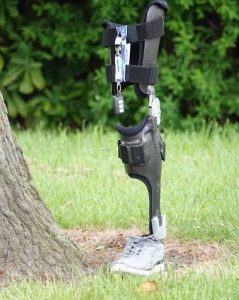
Mechanical vs. Stance-Control KAFOs: What’s the Difference?
How a Locked-Knee KAFO Works
In a locked-knee design, the knee joint is mechanically secured in an extended position. This prevents unwanted knee flexion while the person is standing or walking.
The locked position can be useful for people who do not have enough muscle strength or control to keep their knee stable independently. By providing external stability, the KAFO can help prevent the knee from buckling during weight-bearing.
However, keeping the knee locked can alter the person’s walking pattern. The user may need to compensate with movements at the hip or other parts of the body to advance the leg during walking.
What Is a Stance-Control KAFO?
A stance-control KAFO is designed to provide knee stability during the stance phase of walking while allowing the knee to bend during the swing phase.
This differs from a traditional locked-knee KAFO because the knee is not necessarily fixed in one position throughout the entire walking cycle. Instead, the orthosis uses a mechanical or electronic mechanism to control when the knee is stable and when it can move.
The goal is to provide the necessary support while allowing a more natural pattern of knee movement when appropriate.
How Stance Control Works
During the stance phase, when the user’s leg is supporting body weight, the knee mechanism is designed to provide stability. Once the leg enters the swing phase, the mechanism can allow controlled knee flexion.
This can make it easier to advance the leg during walking and may reduce some of the compensatory movements associated with a permanently locked knee.
Mechanical vs. Stance-Control KAFOs: Key Difference
The primary difference is how the knee is controlled during walking.
A conventional mechanical KAFO may lock the knee in extension throughout the walking cycle. A stance-control KAFO aims to stabilise the knee during weight-bearing while permitting movement during swing.
Both approaches have advantages and limitations. The appropriate design depends on the user’s muscle strength, joint control, walking ability, balance and functional goals.
Level of Knee Stability
Both types can provide substantial knee stability. A locked mechanical KAFO offers a straightforward method of preventing knee flexion when stability is required.
A stance-control KAFO also provides stability during stance, but attempts to provide additional freedom of movement during swing.
Walking Mechanics
A locked knee can make walking more demanding because the leg remains straight during swing. Users may compensate by lifting the hip, rotating the leg or using other movements to clear the foot from the ground.
A stance-control KAFO can allow knee flexion during swing, potentially creating a more efficient and natural walking pattern for appropriately selected users.
Benefits of Mechanical KAFOs
Mechanical KAFOs remain an important option for people who require reliable and substantial lower-limb support.
Reliable Stability
A locked mechanical knee joint can provide predictable support. For people with very limited knee control, keeping the knee stable may be a priority.
Simple Mechanical Design
Traditional mechanical systems can be relatively straightforward compared with more complex stance-control mechanisms. This may make them easier to understand, maintain or adjust in some circumstances.
Suitable for Significant Weakness
People with substantial muscle weakness may require a high level of external support. A locked-knee KAFO can provide this when the individual cannot safely control knee movement during weight-bearing.
Benefits of Stance-Control KAFOs
Stance-control systems are designed to combine stability with greater freedom of movement.
Greater Knee Movement
Allowing the knee to bend during swing can make it easier to advance the leg. This may reduce the need for compensatory hip movements.
Potentially More Natural Gait
Because the knee can move during appropriate parts of the walking cycle, a stance-control KAFO may allow a walking pattern that is closer to normal biomechanics for suitable users.
Improved Functional Mobility
For some users, the combination of stance stability and swing-phase movement can make walking more efficient and comfortable. However, results depend heavily on the person’s physical abilities and the specific KAFO design.
Potential Limitations of Mechanical KAFOs
Although mechanical KAFOs can provide effective stability, a locked knee may create challenges during walking.
The user may need to compensate to move the straight leg forward. These compensations can require additional energy and may affect walking efficiency.
A mechanical KAFO can also feel restrictive because the knee cannot move freely when the locking mechanism is engaged.
However, these limitations may be acceptable when reliable knee stability is the primary requirement.
Potential Limitations of Stance-Control KAFOs
Stance-control KAFOs can provide greater freedom of movement, but they are generally more complex than traditional locked designs.
Specific Physical Requirements
Not every person is suitable for a stance-control KAFO. The user may need sufficient muscle control, balance, hip strength and walking ability to use the mechanism effectively.
More Complex Components
The additional mechanical or electronic components can increase the complexity of the orthosis. Correct alignment, adjustment and maintenance are important to ensure the system performs as intended.
Learning to Use the Device
Users may require training and practice to become familiar with the way the stance-control mechanism operates. Rehabilitation professionals can provide guidance on safe use and walking technique.
Which KAFO Is Better?
There is no universally better option. The most appropriate KAFO is the one that matches the individual’s functional requirements.
A locked mechanical KAFO may be appropriate when maximum simplicity and reliable knee stability are priorities. A stance-control KAFO may be considered when the user has enough physical control to benefit from greater knee movement during swing.
The decision should be based on a comprehensive assessment rather than the desire for the most advanced technology.
How Does an Orthotist Choose Between Them?
A qualified orthotist considers several factors when determining which KAFO design may be appropriate.
Muscle Strength
The strength of the hip, knee and ankle muscles can influence the type of support required. A person with very limited voluntary control may need a more restrictive design.
Balance and Coordination
Balance and coordination are important when using a device that allows controlled knee movement. The orthotist will consider whether the user can safely manage the required walking pattern.
Walking Environment
The person’s usual environment can also influence the choice. Walking at home, outdoors, on uneven surfaces or over longer distances may create different requirements.
Daily Goals
The user’s priorities should be considered. Some people may prioritise maximum stability, while others may place greater importance on walking efficiency, appearance, comfort or reducing compensatory movement.
Can a KAFO Be Changed Over Time?
Orthotic requirements can change as a person’s strength, mobility or medical condition changes. A person may initially require a locked mechanical KAFO and later become a candidate for a less restrictive design.
Conversely, someone may require additional stability if their muscle strength or balance declines.
Regular reviews with an orthotist can help determine whether the current KAFO remains appropriate. Adjustments or replacement may be recommended when the device no longer meets the user’s needs.
Mechanical vs. Stance-Control KAFOs: Making the Right Choice
Mechanical and stance-control KAFOs both aim to provide knee, ankle and foot support, but they approach knee control differently. A traditional mechanical KAFO can provide dependable stability by locking the knee, while a stance-control KAFO aims to stabilise the knee during stance and permit movement during swing.
The best option depends on the individual’s strength, balance, gait, joint control and mobility goals. A more advanced orthosis is not necessarily the most appropriate choice, and a simpler design can sometimes provide the ideal combination of stability and usability.
If you are considering a KAFO, speak with a qualified orthotist for an individual assessment. They can evaluate your walking pattern and physical capabilities and recommend a design that provides appropriate support while promoting safe and functional mobility.