How KAFOs Support the Knee, Ankle and Foot
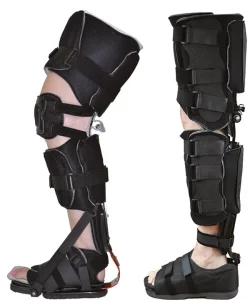
A Knee-Ankle-Foot Orthosis, commonly known as a KAFO, is a specialised lower-limb orthotic device designed to provide support across three important areas of the leg: the knee, ankle and foot. KAFOs can help people who experience significant weakness, instability, poor motor control or difficulty maintaining appropriate lower-limb alignment during standing and walking.
Unlike an Ankle-Foot Orthosis (AFO), which primarily supports the ankle and foot, a KAFO extends above the knee to provide additional control. This makes it a valuable option for people who need more comprehensive lower-limb support.
Understanding how KAFOs support each part of the lower limb can help users, carers and families understand their purpose and how they may contribute to safer, more functional mobility.
What Is a KAFO?
KAFO stands for Knee-Ankle-Foot Orthosis. It is an orthotic device designed to provide external support and control to the knee, ankle and foot.
A KAFO may be constructed using materials such as thermoplastic, carbon fibre, metal components or combinations of different materials. The design can be customised according to the user’s strength, joint movement, gait pattern, lifestyle and functional goals.
The amount of support provided depends on the type of KAFO and its components. Some designs provide firm control, while others are designed to allow selected movements while maintaining stability where it is needed.
How Does a KAFO Support the Knee?
The knee is one of the primary joints addressed by a KAFO. Knee weakness or instability can make standing and walking difficult, particularly if the knee tends to buckle when weight is placed through the leg.
A KAFO can provide external stability to help control knee movement and maintain the leg in a more functional position during weight-bearing.
How KAFOs Support the Knee, Ankle and Foot
Preventing Knee Buckling
Knee buckling occurs when the knee unexpectedly bends or gives way during weight-bearing. This can make walking unsafe and may increase the risk of losing balance.
A KAFO can help control excessive knee flexion and provide a stable mechanical structure around the joint. Depending on the design, the knee joint may be locked or controlled to provide stability during standing and walking.
Supporting Knee Alignment
Appropriate alignment is important for efficient and controlled movement. A KAFO can help guide the position of the knee and lower limb during weight-bearing.
By controlling unwanted movement, the orthosis may help create a more predictable movement pattern. The specific alignment strategy depends on the individual’s physical assessment and orthotic requirements.
Stance-Control Knee Mechanisms
Some KAFOs use stance-control mechanisms. These systems are designed to provide knee stability during the stance phase of walking while allowing the knee to move more freely during the swing phase.
This approach can provide an alternative to a permanently locked knee joint for appropriately selected users. It may allow a more functional walking pattern while still providing support when the leg is bearing weight.
How Does a KAFO Support the Ankle?
The ankle plays an important role in maintaining balance and controlling how the foot interacts with the ground. Weakness or limited control at the ankle can affect the entire walking pattern.
The lower portion of a KAFO can help stabilise the ankle and control unwanted movements.
Controlling Ankle Movement
Depending on its design, a KAFO can limit excessive ankle movement while maintaining an appropriate position. This can be useful when a person has insufficient muscle control to maintain ankle stability independently.
The amount of ankle movement allowed can be adjusted according to the individual’s needs.
Supporting Foot Clearance
During walking, the foot needs to clear the ground as the leg moves forward. Reduced ankle control can make it difficult to lift the front of the foot, potentially causing the toes to catch on the ground.
A KAFO can incorporate ankle positioning designed to help maintain the foot in a more functional position during the swing phase.
Improving Ankle Stability
An unstable ankle can affect confidence and balance during standing and walking. By providing external support, a KAFO can help maintain a more controlled ankle position when the foot is in contact with the ground.
This support can be particularly useful when ankle weakness occurs alongside significant knee or lower-limb weakness.
How Does a KAFO Support the Foot?
The foot forms the foundation of the lower limb during standing and walking. Its position can influence the movement and alignment of the ankle, knee and leg.
A KAFO includes a foot section that helps maintain appropriate foot positioning and provides a stable connection between the orthosis and the ground.
Maintaining Foot Position
A KAFO can help position the foot in a way that supports functional standing and walking. This may be important for people who have difficulty controlling foot position due to weakness or neurological impairment.
The foot section can be shaped and adjusted to accommodate individual requirements.
Providing a Stable Base
A stable foot position can contribute to better overall lower-limb control. The KAFO provides a structured connection between the foot and the rest of the orthosis, allowing support from the ground to be transferred through the device.
Appropriate footwear is also important because the shoe interacts with the orthosis and the ground during walking.
How the Knee, Ankle and Foot Work Together
Although a KAFO provides support to three separate areas, its function is not limited to treating each joint individually. The knee, ankle and foot work together as part of a coordinated movement system.
A change in one joint can affect movement elsewhere in the leg. For example, poor ankle control may alter knee movement, while knee instability can affect how a person places weight through the foot.
Supporting the Whole Lower Limb
By connecting the knee, ankle and foot within one orthotic system, a KAFO can help coordinate the position of the lower limb during standing and walking.
This integrated support can be particularly valuable when weakness or impaired motor control affects multiple joints rather than a single area.
Who May Benefit From a KAFO?
KAFOs may be considered for people with conditions that significantly affect lower-limb strength, stability or motor control. They may be used as part of a broader rehabilitation and mobility management plan.
Potential users can include people with certain neurological conditions, spinal cord injuries, muscle weakness and other conditions affecting lower-limb function.
Neurological Conditions
Some neurological conditions can affect the signals between the brain, spinal cord and muscles. This may result in weakness, reduced coordination or difficulty controlling the knee, ankle and foot.
A KAFO can provide external support where voluntary muscle control is insufficient for safe or functional movement.
Significant Lower-Limb Weakness
When weakness affects several muscle groups in the lower limb, an AFO may not provide sufficient support. A KAFO can extend the area of control to the knee, potentially providing greater stability.
The appropriate design depends on the individual’s remaining strength and movement capabilities.
Different KAFO Designs
There is no single KAFO design suitable for every user. Orthoses can be customised based on the amount of support required and the person’s functional goals.
Locked-Knee KAFOs
A locked-knee KAFO keeps the knee in a stable position during weight-bearing. This can provide substantial stability for people who cannot reliably control their knee.
However, locking the knee can affect walking mechanics, so the design should be selected carefully.
Stance-Control KAFOs
Stance-control designs aim to combine stability with greater freedom of movement. The knee can be stabilised during weight-bearing and released during the appropriate part of the walking cycle.
These systems can be more complex and are not suitable for every user, so professional assessment is essential.
How Is a KAFO Fitted?
A KAFO should be assessed and fitted by a qualified orthotist. The fitting process begins with an evaluation of strength, joint range of motion, alignment, gait and functional goals.
The orthotist may assess how the user stands, walks and transfers between positions. They also consider footwear, daily activities, comfort and the user’s ability to manage the device independently.
Once the KAFO is fitted, adjustments may be required to optimise comfort, alignment and function. Regular reviews are particularly important if the user’s physical condition changes.
What Are the Benefits of KAFO Support?
The potential benefits of a KAFO vary from person to person, but may include improved lower-limb stability, better control during standing and walking, and greater confidence during mobility.
A KAFO may also help compensate for muscle weakness and support more consistent positioning of the knee, ankle and foot.
It is important to remember that an orthosis does not cure the underlying condition. Instead, it provides external support that may help a person use their existing physical abilities more effectively.
Is a KAFO Right for You?
A KAFO can provide comprehensive support for the knee, ankle and foot when lower-limb weakness or instability affects multiple joints. By controlling movement and positioning across the leg, it can help create a more stable foundation for standing and walking.
However, the right orthosis depends on individual needs. Factors such as muscle strength, joint range of motion, balance, gait pattern, medical condition and daily activities all influence the choice.
If you are considering a KAFO, a qualified orthotist can assess your lower-limb function and recommend an appropriate design. With the right assessment, fitting and ongoing adjustments, a KAFO can provide valuable support while helping you work towards your mobility goals.