How Much Do Microprocessor Knees and Feet Cost?
Microprocessor knees and feet are among the most advanced options available in modern prosthetic technology. By using sensors, computer processing, and electronically controlled components, these devices can adapt to changes in movement and walking conditions.
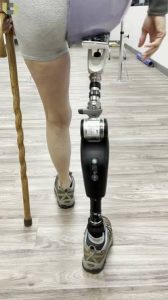
How Much Do Microprocessor Knees and Feet Cost?
One of the most common questions for people considering this technology is: how much does a microprocessor knee or foot cost?
There is no single price because a prosthesis is not simply one product. The final cost can depend on the specific component, socket, alignment, fabrication, clinical appointments, accessories, maintenance, and the user’s individual requirements.
In Australia, high-tech prosthetic devices can represent a significant investment. Current Australian disability-support information classifies assistive technology costing more than $15,000 as high-cost, with prosthetics requiring appropriate assessment and evidence before funding may be approved through the NDIS.
How Much Does a Microprocessor Knee Cost?
A complete above-knee prosthesis incorporating a microprocessor knee can cost tens of thousands of dollars. Indicative Australian sources currently place prosthetic legs with microprocessor knees at around $80,000 or more at the higher end, although actual quotes can be considerably different depending on the device and complete prosthetic configuration.
It is important to understand that this figure should not be treated as a standard retail price. A prosthetic knee is only one component of an above-knee prosthesis.
The final quote may include the knee, socket, pylon, foot, liners, suspension system, fabrication, alignment, fitting, programming, clinical appointments, and other services.
What Affects the Price of a Microprocessor Knee?
Several factors can influence the price of a microprocessor knee.
The technology used inside the knee is one of the biggest factors. Different models can have different sensors, control algorithms, activity modes, battery systems, and environmental protection.
Other factors include the user’s mobility level, the complexity of the socket, the other prosthetic components required, and the amount of professional fitting and programming involved.
A more advanced knee may also require specialised servicing and software support, which can contribute to long-term ownership costs.
How Much Does a Microprocessor Prosthetic Foot Cost?
Microprocessor prosthetic feet and ankle-foot systems can also vary significantly in price. Some Australian estimates place advanced prosthetic legs incorporating microprocessor technology at tens of thousands of dollars, with high-end configurations potentially reaching $80,000 or more.
The price of the foot itself should not be confused with the cost of a complete prosthetic leg. For someone with a below-knee amputation, the final prosthesis may include the foot, socket, liner, suspension system, pylon, adapters, fabrication, fitting, and professional services.
For this reason, the most useful way to find out what your prosthesis will cost is to obtain an individualised quote from a qualified prosthetist.
Why Are Microprocessor Feet Expensive?
Microprocessor feet contain sophisticated components designed to monitor movement and adapt their behaviour.
Depending on the model, these systems may incorporate sensors, computer-controlled ankle movement, rechargeable batteries, electronic control systems, and specialised software.
The research and engineering involved in developing this technology, along with manufacturing, clinical fitting, programming, servicing, and support, all contribute to the overall cost.
What Is Included in the Cost of a Prosthesis?
When comparing prices, it is important to ask exactly what the quoted amount includes.
The Prosthetic Component
The knee or foot is the most obvious component, but it is only part of the overall system. The selected device will depend on your mobility level, goals, body weight, activity requirements, and clinical assessment.
The Prosthetic Socket
The socket is the part of the prosthesis that connects to the residual limb. Achieving an appropriate socket fit is essential for comfort, control, and function.
Socket fabrication may involve measurements, casting or scanning, test sockets, adjustments, and a final socket. These services can add substantially to the overall cost.
Fitting and Clinical Services
A prosthesis needs to be fitted and adjusted by a qualified professional. The process can involve multiple appointments to assess alignment, comfort, gait, and function.
Microprocessor devices may also require programming and fine-tuning to match the user’s walking pattern and preferences.
What Are the Ongoing Costs?
The initial purchase price is only one part of the financial commitment associated with a prosthesis.
Maintenance and Repairs
Microprocessor knees and feet contain electronic components, batteries, sensors, and other specialised parts. Regular maintenance and occasional repairs may therefore be required.
Ask your prosthetist about expected servicing intervals, warranty coverage, repair costs, and what happens if a component needs replacement.
Battery Replacement and Charging
Microprocessor devices generally require rechargeable batteries. Although charging itself is usually straightforward, batteries have a finite lifespan and may eventually need replacement.
Understanding battery life and replacement costs can help you budget for long-term use.
Socket Replacement
A socket may need to be replaced or modified as your residual limb changes. Changes in body weight, tissue volume, activity, or comfort can affect socket fit.
The NDIS also recognises that prosthetic and orthotic needs can involve ongoing assessment and replacement considerations rather than simply a one-time purchase.
Does the NDIS Cover Microprocessor Knees and Feet?
For eligible Australians, the NDIS can fund assistive technology when it meets the scheme’s reasonable-and-necessary requirements and is related to disability-specific needs and goals.
The NDIS states that prosthetics are considered high-risk assistive technology and that higher-cost equipment requires appropriate information about price, evidence, and assessment before approval.
The NDIS generally considers cost-effectiveness when assessing prosthetic and orthotic technology. If a more expensive option is requested, evidence may be required showing why a lower-cost alternative is unsuitable and how the more expensive device will provide longer-term benefits.
This means funding is not automatically guaranteed simply because a microprocessor knee or foot is clinically available.
What Evidence May Be Required?
An assessment can consider your functional needs, goals, current mobility, the environments in which you use your prosthesis, and the expected benefits of the proposed technology.
The NDIS indicates that an appropriate quote is also required as part of the prosthetics and orthotics assistive technology assessment process.
Your prosthetist or relevant assistive technology assessor can help prepare the information required for your funding application.
Are Microprocessor Knees and Feet Worth the Cost?
Whether a microprocessor device is worth the cost depends on what you need from your prosthesis.
For some users, adaptive technology can provide meaningful benefits when walking at different speeds, navigating slopes, managing uneven surfaces, or performing everyday activities.
Clinical evidence has found potential benefits from microprocessor-controlled prostheses for areas such as mobility, safety, and satisfaction. However, the benefits vary between individuals, and not everyone requires the most advanced available technology.
The most expensive option is therefore not automatically the best option.
How to Get an Accurate Price
The best way to determine the cost of a microprocessor knee or foot is to arrange an assessment with a qualified prosthetist.
Ask for a Detailed Quote
Request a quote that clearly identifies the prosthetic components, socket, fabrication, fitting, programming, clinical services, and any other included costs.
Ask About Long-Term Costs
Find out about servicing, repairs, battery replacement, socket replacement, warranties, and expected component lifespan.
Discuss Funding Options
If you are an NDIS participant, ask your prosthetist and assistive technology assessor about the evidence and documentation required for your particular circumstances.
Understanding the True Cost of Microprocessor Prosthetics
Microprocessor knees and feet can cost significantly more than simpler prosthetic components, but the total price depends on far more than the electronic device itself.
The final cost can include the prosthetic component, socket, suspension, fabrication, fitting, programming, rehabilitation, maintenance, repairs, and future replacements.
In Australia, high-cost prosthetic technology may be considered for NDIS funding when it meets the relevant requirements and is supported by appropriate evidence and assessment.
If you are considering a microprocessor knee or foot, focus not only on the purchase price but also on how the technology could support your mobility, independence, safety, and long-term goals. A qualified prosthetist can assess your individual needs and provide an accurate quote based on the complete prosthetic solution rather than the component price alone.