Below-Knee Prosthesis Options: Features, Benefits, and Costs
Choosing a below-knee prosthesis is an important decision for individuals who have experienced lower-limb amputation. The right prosthetic leg can help improve mobility, support independence, and make everyday activities more manageable. However, with different prosthetic designs, materials, and technologies available, understanding the options can be challenging.
A below-knee prosthesis, also known as a transtibial prosthesis, replaces the portion of the leg below the knee. Because the natural knee joint remains intact, many individuals can achieve functional walking and participate in a variety of activities with an appropriately fitted prosthesis and suitable rehabilitation.
The features, benefits, and costs of a prosthesis depend on individual requirements, activity levels, component selection, and available funding. Understanding these factors can help you make an informed decision with guidance from a qualified prosthetist.
What Is a Below-Knee Prosthesis?
A below-knee prosthesis is an artificial limb designed to replace the lower portion of the leg following an amputation. It supports body weight and helps users maintain balance while standing, walking, and performing everyday tasks.
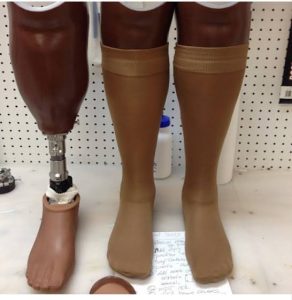
Below-Knee Prosthesis Options: Features, Benefits, and Costs
Main Components of a Below-Knee Prosthesis
Most below-knee prosthetic systems include several components that work together to provide comfort, stability, and movement.
- Prosthetic socket: The custom-fitted section that connects the residual limb to the prosthesis.
- Prosthetic liner: A cushioning interface that helps protect the skin and improve comfort.
- Suspension system: Helps keep the prosthesis securely attached during movement.
- Prosthetic foot: Supports standing, balance, and movement during walking.
- Connecting components: Join the socket and foot while providing strength and appropriate alignment.
Each component contributes to the overall performance of the prosthesis. Selecting suitable components is essential for achieving a comfortable fit and supporting the user’s functional goals.
Types of Below-Knee Prosthesis Options
Below-knee prostheses can be customised to suit different mobility requirements, lifestyles, and budgets. The most appropriate option depends on factors such as physical condition, walking ability, personal goals, and professional assessment.
1. Basic Below-Knee Prostheses
Basic prosthetic systems are generally designed to provide dependable support for everyday mobility. They may suit individuals whose primary activities include walking around the home, completing household tasks, and travelling short distances.
Features:
- Functional prosthetic components designed for routine use.
- Socket and suspension options selected for individual needs.
- Practical designs intended to support standing and walking.
Benefits:
A basic prosthesis may offer a practical solution for people with relatively straightforward mobility requirements. Depending on the components and funding arrangements, it may also be more affordable than systems incorporating specialised features.
Costs:
The cost varies according to the socket, prosthetic foot, fabrication requirements, and professional services included. A basic design is not automatically suitable for everyone, so component selection should be based on an individual assessment.
2. Dynamic-Response Prostheses
Dynamic-response prosthetic feet are designed to flex during loading and release stored energy during movement. Some use carbon-fibre components to support responsiveness during walking.
Features:
- Flexible components that respond to movement.
- Energy-storage and return characteristics.
- Designs available for different activity levels.
Benefits:
Appropriately selected dynamic-response feet may help some users walk more efficiently and comfortably, particularly when their daily activities involve frequent walking. Performance varies by design, alignment, and individual needs.
Costs:
These systems may cost more than simpler alternatives because of their specialised materials and engineering. The final price depends on the specific foot, socket, fitting process, and any additional services required.
3. Custom-Fitted Below-Knee Prostheses
Custom-fitted prostheses are designed around the individual’s residual limb, physical condition, and functional requirements. Customisation is an important part of most modern prosthetic care, although the extent of specialised design varies.
Features:
- A socket shaped to the individual’s residual limb.
- Personalised suspension and liner selection.
- Adjustments based on comfort, stability, and movement.
Benefits:
A well-fitted socket can improve comfort, help distribute pressure, and support control of the prosthesis. Custom fitting is particularly important when the residual limb has unusual contours, sensitive skin, or changing volume.
Costs:
Pricing depends on the complexity of the fitting, fabrication methods, materials, and number of adjustments required. Additional modifications may be necessary as the residual limb changes over time.
4. Sports and Activity-Specific Prostheses
People who participate in running, hiking, or particular sports may require specialised prosthetic components designed for specific movements and impact demands.
Features:
- Components designed for particular activities.
- Different levels of flexibility and energy return.
- Designs selected according to the user’s sport and functional requirements.
Benefits:
A suitable activity-specific prosthesis may help users participate more effectively in chosen recreational or sporting activities. Some individuals may need separate prosthetic systems for everyday walking and specialised exercise.
Costs:
Specialised components can increase the initial expense. Additional fitting, training, maintenance, and equipment may also affect the total cost. A prosthetist can advise whether a dedicated sports prosthesis is appropriate.
Factors That Affect Below-Knee Prosthesis Costs
There is no single price for every below-knee prosthesis. Costs vary by country, provider, component selection, and funding arrangements.
Prosthetic Components and Materials
The prosthetic foot, socket, liner, suspension system, and structural components all influence the overall price. Advanced materials and specialised feet may cost more than simpler alternatives.
Assessment, Fitting, and Rehabilitation
The total expense may include clinical assessment, socket fabrication, fitting appointments, alignment, adjustments, and rehabilitation services. Always confirm which services are included in a quotation.
Maintenance and Replacement Parts
Liners, socks, and other consumables may require periodic replacement. Components can also need servicing or replacement because of wear, damage, or changing mobility requirements.
When comparing prices, consider the long-term cost of ownership rather than focusing only on the initial device.
How to Choose the Right Below-Knee Prosthesis
Selecting an appropriate prosthesis involves balancing comfort, performance, affordability, and lifestyle requirements.
Assess Your Mobility Goals
Consider your everyday activities, walking distances, work requirements, and recreational interests. A prosthesis intended for basic mobility may differ from one designed for frequent walking or sports.
Prioritise Comfort and Fit
Socket comfort is essential for successful prosthetic use. Discuss any skin sensitivities, pressure concerns, or previous fitting difficulties with your prosthetist.
Compare Quotes and Funding Options
Request itemised quotations from qualified providers. Compare components, fitting services, warranties, follow-up appointments, and maintenance costs.
In Australia, eligible individuals may be able to access assistance through public health services, the National Disability Insurance Scheme, veterans’ programs, or relevant transport and workplace injury schemes. Eligibility and coverage vary, so confirm the applicable requirements before committing to expenses.
Conclusion
Below-knee prosthesis options range from practical everyday systems to advanced dynamic-response designs and specialised sports prostheses. Each option offers different features, benefits, and costs, making individual assessment essential.
The best prosthesis is not necessarily the most expensive one. It is the system that provides an appropriate fit, meets your mobility needs, and supports your lifestyle within your available budget.
By comparing components, understanding ongoing expenses, exploring funding options, and working with a qualified prosthetist, you can make an informed decision about your prosthetic care and take meaningful steps towards improved mobility and independence.