Understanding Scoliosis Bracing: A Complete Guide for Beginners
Being diagnosed with scoliosis can raise many questions, particularly when it comes to understanding treatment options. For children, teenagers and their parents, learning about scoliosis bracing is an important first step towards managing the condition and making informed healthcare decisions.
Scoliosis bracing is a commonly recommended non-surgical treatment for individuals with certain types of spinal curvature, especially those who are still growing. It involves wearing a specially designed brace that applies targeted pressure to the torso to help prevent the spinal curve from becoming more severe.
Although the idea of wearing a brace every day may initially seem challenging, modern scoliosis braces are designed to provide individualised support while allowing patients to continue participating in everyday activities.
In this complete beginner’s guide, we explore what scoliosis bracing involves, how it works, the different types of braces available, and what patients can expect throughout their treatment journey.
What Is Scoliosis Bracing?
Scoliosis bracing is a non-surgical treatment used to help manage spinal curvature and reduce the risk of scoliosis progressing. It is most commonly recommended for children and adolescents who have moderate scoliosis and still have significant growth remaining.
A scoliosis brace is a medical device worn around the torso. It is designed to apply carefully positioned pressure to specific areas of the body, helping influence spinal alignment as the patient grows.
The primary goal of bracing is not necessarily to permanently straighten the spine. Instead, it aims to prevent the existing spinal curve from worsening during periods of growth.
Scoliosis bracing is generally recommended following an assessment by a healthcare professional, who considers the patient’s spinal curve, age, skeletal maturity and likelihood of progression.
How Does Scoliosis Bracing Work?
Scoliosis braces work by applying corrective forces to the torso. These forces are strategically positioned to help counteract the sideways curvature and rotation associated with scoliosis.
The brace is designed according to the patient’s individual spinal curve pattern, ensuring that pressure is applied where it is most beneficial.
Corrective Pressure and Spinal Support
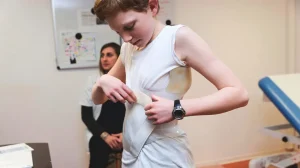
A scoliosis brace uses specific pressure points to influence the position of the spine and surrounding structures.
Understanding Scoliosis Bracing: A Complete Guide for Beginners
These pressure points are balanced with expansion areas that allow the torso to move into a more favourable position. This approach helps manage spinal curvature while the patient continues to grow.
Preventing Curve Progression
One of the main objectives of scoliosis bracing is to reduce the likelihood of spinal curvature becoming more severe.
During adolescence, rapid growth can increase the risk of scoliosis progression. Wearing a brace as prescribed can help manage this risk and potentially reduce the need for more invasive treatments.
Supporting Growing Bodies
Bracing is particularly useful during childhood and adolescence because the spine is still developing.
The brace provides external corrective support during this important growth period. Treatment is generally continued until the patient reaches sufficient skeletal maturity and the risk of further progression decreases.
Who Is Scoliosis Bracing Suitable For?
Not every person diagnosed with scoliosis needs a brace. The decision depends on several individual factors, including spinal curve severity, age and remaining growth.
Bracing is commonly recommended for adolescents with idiopathic scoliosis who have curves measuring approximately 25 to 40 degrees and have significant growth remaining.
However, these measurements are general guidelines rather than strict requirements. A specialist must assess each patient to determine the most appropriate treatment approach.
Children and Teenagers
Children and teenagers are the most common candidates for scoliosis bracing because their spines are still growing.
If scoliosis is identified early and the curve is at risk of progressing, bracing may help prevent further deterioration during adolescence.
Adults With Scoliosis
Scoliosis bracing is less commonly used in adults to prevent curve progression. However, certain adults may benefit from bracing for additional spinal support, improved posture or symptom management.
Adult treatment goals are generally different from those for growing adolescents. An appropriate brace should be selected following an individual clinical assessment.
What Are the Different Types of Scoliosis Braces?
There are several types of scoliosis braces, each designed to address different spinal curve patterns and patient requirements.
The most suitable option depends on the location and severity of the curve, the patient’s physical development and the recommended treatment strategy.
Boston Brace
The Boston Brace is one of the most commonly prescribed scoliosis braces. It is a thoracolumbosacral orthosis (TLSO) that generally extends from below the chest to the hips.
It applies targeted pressure to the torso to help manage spinal curvature. The brace is typically worn underneath clothing and is designed for daily use.
Chêneau Brace
The Chêneau brace is a custom-made scoliosis brace designed to address different components of spinal curvature, including trunk rotation.
It uses strategically positioned pressure areas and expansion spaces to create corrective forces based on the patient’s individual anatomy.
Wilmington Brace
The Wilmington Brace is another type of TLSO that is custom-moulded to the patient’s torso.
It provides corrective support through targeted pressure and is generally worn throughout the day according to the prescribed treatment schedule.
Charleston Bending Brace
Unlike traditional daytime braces, the Charleston Bending Brace is primarily designed for nighttime use.
It places the torso into a corrective bending position intended to counteract the spinal curve while the patient sleeps. Its suitability depends on the patient’s specific curve pattern.
How Long Do You Need to Wear a Scoliosis Brace?
The recommended wearing time varies depending on the type of brace and the patient’s individual treatment requirements.
Many traditional scoliosis braces are prescribed for approximately 18 to 23 hours per day. Some braces, such as nighttime bending braces, follow a different wearing schedule.
Consistency is essential because research has shown that greater brace-wearing time is associated with better treatment outcomes in appropriately selected patients.
Patients should follow the wearing instructions provided by their healthcare professional and orthotist. The treatment schedule should not be changed without professional guidance.
Regular appointments are also necessary to ensure the brace continues to fit correctly as the patient’s body develops.
What Should You Expect When Getting a Scoliosis Brace?
Getting a scoliosis brace usually involves several stages, from the initial assessment to fitting and ongoing adjustments.
Initial Assessment
The process begins with an assessment of the patient’s spinal curvature, posture, medical history and physical development.
Healthcare professionals may review X-rays and other clinical information to determine whether bracing is appropriate.
Brace Design and Fitting
If bracing is recommended, an orthotist will take measurements or a scan of the patient’s torso to create a brace that suits their individual body shape and spinal curve.
During the fitting appointment, the orthotist checks the brace’s positioning, comfort and pressure areas to ensure it is functioning as intended.
Follow-Up Appointments
Regular follow-up appointments help monitor treatment progress and identify any necessary adjustments.
As children grow, their bodies change, which means their braces may require modifications or replacement to maintain an appropriate fit.
Tips for Adjusting to Life With a Scoliosis Brace
Adapting to wearing a scoliosis brace can take time. Establishing a comfortable routine can make the experience easier for patients and their families.
Some practical tips include:
Wear suitable clothing: Soft, breathable and close-fitting clothing can help reduce friction underneath the brace.
Follow a consistent routine: Wearing the brace according to the prescribed schedule helps establish good habits.
Check your skin regularly: Look for persistent redness, irritation or areas of discomfort.
Stay active: Continue participating in appropriate physical activities unless advised otherwise by your healthcare professional.
Keep the brace clean: Follow the orthotist’s instructions for cleaning and maintaining the device.
Communicate concerns: Report discomfort or fitting problems so adjustments can be made when necessary.
Parents can also support younger patients by encouraging positive conversations and helping them feel confident throughout treatment.
Is Scoliosis Bracing Effective?
Scoliosis bracing is supported by clinical research and is considered an effective treatment for reducing the risk of curve progression in appropriately selected adolescents.
The Bracing in Adolescent Idiopathic Scoliosis Trial (BrAIST) demonstrated that wearing a brace significantly improved the likelihood of preventing spinal curves from progressing to the surgical threshold.
However, treatment effectiveness varies between individuals. Factors such as curve severity, skeletal maturity, brace design and wearing consistency all contribute to outcomes.
It is important to understand that bracing does not guarantee complete correction of scoliosis. Its primary purpose is to manage the condition and reduce the likelihood of further progression while the patient is growing.
When Can You Stop Wearing a Scoliosis Brace?
Most adolescent patients continue bracing until they reach skeletal maturity and their risk of curve progression has significantly decreased.
Healthcare professionals monitor growth, skeletal development and spinal curvature to determine when it may be appropriate to discontinue treatment.
Stopping bracing too early can increase the risk of curve progression if the patient still has substantial growth remaining.
Even after treatment finishes, follow-up assessments may be recommended to monitor spinal stability over time.
Conclusion: Taking the First Step Towards Understanding Scoliosis Bracing
Understanding scoliosis bracing is an important part of navigating a scoliosis diagnosis. For growing children and teenagers, wearing an appropriately designed brace can help manage spinal curvature and reduce the risk of progression without requiring surgery.
From selecting the right brace to following a consistent wearing schedule, every stage of treatment plays a role in achieving the best possible outcome.
If you or your child has been diagnosed with scoliosis, speaking with an experienced healthcare professional or orthotist is an important first step. With the right guidance, regular monitoring and an individualised treatment plan, scoliosis bracing can become a manageable part of everyday life.