What Factors Affect the Cost of a Below-Knee Prosthetic Leg?
A below-knee prosthetic leg can help individuals regain mobility, improve independence, and participate in everyday activities following an amputation. However, the cost of a below-knee prosthetic leg varies significantly depending on individual needs, component selection, fitting requirements, and ongoing care.
For people considering a prosthesis, understanding these costs is an important step towards making an informed decision. Some prosthetic systems are designed for basic daily mobility, while others incorporate advanced materials and specialised components to support demanding activities.
There is no single price that applies to every patient. The final cost depends on several factors, including the design of the prosthesis, the technology used, the expertise required for fitting, and the availability of funding.
This article explores the main factors affecting the cost of a below-knee prosthetic leg and explains what to consider when comparing options.
What Is a Below-Knee Prosthetic Leg?
A below-knee prosthetic leg, also known as a transtibial prosthesis, is an artificial limb designed to replace the portion of the leg below the knee after an amputation. Because the natural knee joint remains intact, many individuals can achieve functional mobility with a suitable prosthesis and appropriate rehabilitation.
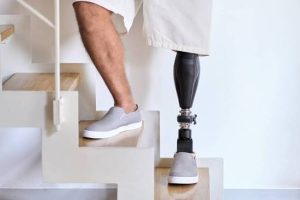
A typical below-knee prosthesis includes a socket, liner, suspension system, connecting components, and prosthetic foot. Each component contributes to the device’s comfort, stability, durability, and performance.
The cost depends on how these components are selected and customised to suit the user’s physical condition, lifestyle, and mobility goals.
What Factors Affect the Cost of a Below-Knee Prosthetic Leg?
1. Type and Quality of Prosthetic Components
One of the biggest factors affecting the cost of a below-knee prosthetic leg is the type and quality of its components. Different components offer different levels of comfort, flexibility, durability, and functional performance.
Prosthetic Foot Design
The prosthetic foot is essential for supporting body weight, maintaining balance, and helping the user move during walking. Basic designs may be suitable for lower activity levels, while advanced feet can provide improved flexibility and energy return.
Carbon-fibre feet, for example, may support more dynamic movement for appropriately selected users. Specialised feet are also available for running, sports, and particular occupational activities.
These advanced designs can increase the overall price. However, the most expensive foot is not necessarily the best option for every individual.
Socket and Suspension System
The socket connects the residual limb to the prosthesis, while the suspension system helps keep the device securely attached. Both components must work together to provide a comfortable and reliable fit.
Custom socket fabrication and specialised suspension systems can influence the total cost. The appropriate design depends on the shape of the residual limb, skin condition, activity level, and personal comfort requirements.
2. Customisation and Prosthetic Fitting
Every residual limb is different, which means a below-knee prosthesis often requires individual assessment and customisation.
Residual Limb Shape and Condition
The shape, size, and condition of the residual limb influence the socket design. Individuals with sensitive skin, irregular limb shapes, or changing limb volume may require additional fitting considerations.
Creating a suitable socket can involve measurements, casting, digital scanning, trial fittings, and modifications. These processes require professional expertise and can affect the final price.
Alignment and Adjustments
Correct alignment helps the prosthesis function appropriately during standing and walking. Prosthetists may need to make adjustments to improve comfort, balance, and movement.
Additional appointments or modifications can increase the overall cost, particularly during the early stages of prosthetic use. However, appropriate fitting is essential for achieving safe and effective function.
3. Materials and Manufacturing Technology
The materials used to manufacture a prosthetic leg can significantly influence its price, weight, strength, and durability.
Lightweight and Advanced Materials
Modern prostheses may incorporate carbon fibre, titanium, aluminium, and specialised polymers. These materials offer different combinations of strength, weight, flexibility, and resistance to wear.
Lightweight materials may be particularly beneficial for individuals who walk frequently or have specific performance requirements. However, their suitability depends on the person’s needs and the design of the prosthesis.
Digital Design and Manufacturing
Some providers use computer-aided design, digital scanning, and computer-controlled manufacturing to support prosthetic fabrication.
These technologies may help create accurate measurements and customised components. The equipment, software, and technical expertise involved can influence the service price.
The best manufacturing method depends on the clinical requirements, provider capabilities, and available budget.
4. Activity Level and Lifestyle Requirements
A person’s lifestyle plays an important role in determining which prosthetic components are appropriate and how much the complete system may cost.
Everyday Walking and Daily Activities
Individuals who primarily walk indoors, complete household tasks, or undertake light daily activities may need a different prosthetic setup from someone with more demanding mobility requirements.
A suitable system should provide sufficient stability, comfort, and durability for the user’s normal routine.
Sports and High-Activity Use
People who participate in running, hiking, or sports may require specialised prosthetic components designed for particular movements or impact levels.
These components can increase the initial cost, and some activities may require additional equipment. A prosthetist can help determine whether a specialised prosthesis is appropriate for the intended activity.
5. Professional Services and Rehabilitation
The cost of a below-knee prosthetic leg may include more than the physical device. Professional assessment, fitting, training, and follow-up services can contribute to the total expense.
Prosthetic Assessment and Fitting
An initial assessment helps determine the individual’s needs, physical condition, and functional goals. The prosthetist uses this information to recommend suitable components and develop an appropriate fitting plan.
The total fee may include assessment appointments, fabrication, initial fitting, alignment, and subsequent adjustments. However, inclusions vary between providers, so it is important to request a detailed quotation.
Rehabilitation and Walking Training
Learning to use a prosthesis may involve physiotherapy and gait training. Rehabilitation can help users develop balance, coordination, strength, and confidence.
These services may be funded separately or included within certain healthcare arrangements. Confirm the costs and available support before beginning treatment.
6. Maintenance, Repairs, and Replacement Parts
A prosthetic leg requires ongoing care to maintain its comfort, safety, and functionality. These recurring expenses should be considered when calculating the long-term cost.
Liners, Socks, and Consumables
Prosthetic liners and socks can wear out with regular use. Replacement frequency depends on the product, activity level, hygiene practices, and changes in residual limb volume.
Although individual items may seem relatively inexpensive compared with the complete prosthesis, recurring purchases can add up over time.
Repairs and Component Replacement
Prosthetic feet, suspension components, and other parts may require servicing or replacement due to wear, damage, or changing functional needs.
The cost depends on the component, warranty conditions, availability of replacement parts, and whether labour is included. Regular reviews can help identify issues before they significantly affect comfort or performance.
7. Funding, Insurance, and Eligibility
The amount a person pays out of pocket may differ considerably from the total price of the prosthesis.
Depending on the country and individual circumstances, financial assistance may be available through public healthcare services, disability funding, private insurance, veterans’ programs, or workplace and transport injury schemes.
In Australia, eligible individuals may be able to access support through state or territory health services, the National Disability Insurance Scheme (NDIS), the Department of Veterans’ Affairs, or relevant injury compensation programs.
Eligibility, approved components, provider requirements, and funding limits vary. Check the relevant program’s rules and obtain approval where required before committing to expenses.
Conclusion
Several factors affect the cost of a below-knee prosthetic leg, including component selection, socket customisation, manufacturing materials, activity level, professional services, and ongoing maintenance. Funding eligibility can also make a significant difference to the amount an individual ultimately pays.
When comparing prosthetic options, request an itemised quotation that explains the included components, fitting services, follow-up appointments, warranties, and potential future expenses.
Working with a qualified prosthetist can help you identify a suitable solution based on your mobility goals, comfort requirements, and budget. By understanding the factors behind the price, you can make a more informed decision and plan for long-term prosthetic care.