Hydraulic vs. Microprocessor Knees: Understanding Your Options
Choosing the right prosthetic knee is an important decision for people living with a transfemoral or above-knee amputation. The knee component can affect stability, walking comfort, confidence, energy use, and how easily you manage everyday activities.
Two options that may be considered are hydraulic knees and microprocessor-controlled knees. While both can provide controlled movement during walking, they use different technologies to achieve it.
A hydraulic knee uses fluid resistance to control movement. A microprocessor knee combines mechanical or hydraulic components with sensors and computer-controlled systems that can adjust the knee’s response as you move.
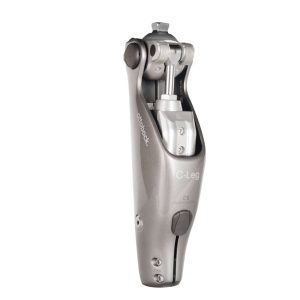
Hydraulic vs. Microprocessor Knees: Understanding Your Options
Neither option is automatically right for everyone. Your mobility level, walking environment, physical abilities, goals, budget, and access to maintenance can all influence the most suitable choice. Understanding how these technologies differ can help you have a more informed discussion with your prosthetist.
What Is a Hydraulic Prosthetic Knee?
A hydraulic prosthetic knee uses fluid, usually contained within a hydraulic cylinder, to control resistance as the knee moves. The hydraulic system can regulate movement during different parts of the walking cycle, helping control how quickly the knee bends and extends.
Hydraulic knees can be designed for different activity levels and may provide a smoother response than simpler mechanical knee mechanisms. Some hydraulic knees allow the prosthetist to adjust resistance to suit the individual’s walking pattern.
Unlike a microprocessor knee, however, a conventional hydraulic knee does not continuously analyse movement using a computer and electronic sensors.
Benefits of Hydraulic Knees
One advantage of a hydraulic knee is its relatively straightforward approach to controlling motion. The hydraulic mechanism can provide controlled resistance while walking and may allow a user to vary their walking speed.
Hydraulic knees can be appropriate for people who have moderate to higher mobility requirements and want controlled movement without relying on a computer-controlled system.
They also do not typically require the same type of electronic charging routine associated with microprocessor-controlled knees. This can appeal to users who prefer a less technology-dependent prosthesis.
The specific performance of a hydraulic knee depends on its design, adjustment, and how well it matches the user’s individual needs.
What Is a Microprocessor Knee?
A microprocessor knee, commonly called an MPK, uses sensors and computer processing to monitor movement and adjust resistance during walking.
Instead of relying solely on fixed mechanical or hydraulic settings, the system can analyse information about the position and movement of the prosthetic knee and make adjustments in real time.
This technology is designed to help the knee respond to changes in walking speed, terrain, and activity. Research has found that microprocessor-controlled knees can provide benefits in areas such as functional mobility, safety, and user satisfaction compared with non-microprocessor knees.
Benefits of Microprocessor Knees
The primary advantage of a microprocessor knee is adaptability. The knee can change its resistance according to what the user is doing, rather than depending entirely on predetermined settings.
For example, a microprocessor knee may respond differently when a person is walking slowly, walking quickly, navigating an obstacle, or moving down a slope.
Clinical research has reported improvements in activities such as hill and stair negotiation, obstacle-course performance, and multitasking while walking for some users of microprocessor-controlled knees.
The 2024 VA/DoD Clinical Practice Guideline for Rehabilitation of Individuals with Lower Limb Amputation suggests microprocessor knees over non-microprocessor knees for prosthetic ambulators to help reduce falls, optimise functional mobility, and improve patient satisfaction.
Hydraulic vs. Microprocessor Knees: Key Differences
Although both technologies can offer controlled knee movement, the way they respond to the user is different.
Movement Control
A hydraulic knee controls movement through fluid resistance. The resistance can be adjusted to influence how the knee behaves during the gait cycle.
A microprocessor knee uses sensors and software to monitor movement and adjust resistance dynamically. This allows the knee to respond to changes that may occur from one step to another.
Research comparing microprocessor and non-microprocessor knees has found that microprocessor systems can be more adaptive to changes in walking speed, although improvements in comfortable walking speed are not necessarily seen in every user.
Walking on Different Surfaces
Walking on level ground is only one part of everyday mobility. Many people encounter ramps, slopes, uneven footpaths, stairs, grass, and other changing surfaces.
A hydraulic knee can be effective across different walking conditions when properly fitted and adjusted. However, the user may need to make greater adjustments to their walking technique.
Microprocessor knees are designed to automatically modify their behaviour in response to changes in movement and environment. This can make them particularly useful for people who regularly move between different surfaces or walking conditions.
Walking Speed
Hydraulic knees can accommodate different walking speeds, depending on their design and adjustment. They may provide a smooth and controlled response for users who vary their pace.
Microprocessor knees can detect changes in movement and modify resistance accordingly. This can make changes in walking speed feel more natural for some users.
However, technology does not guarantee a faster walking speed. Individual outcomes vary, and one clinical study found no significant difference in comfortable self-selected walking speed between a microprocessor knee and a non-microprocessor knee, even though the microprocessor system demonstrated greater adaptability to speed changes.
Stability and Fall Risk
Stability is one of the most important considerations when selecting a prosthetic knee.
A well-fitted hydraulic knee can provide reliable stability when correctly matched to the user’s abilities. Microprocessor knees may offer additional safety features because they can continuously monitor movement and adjust resistance.
Studies have reported reductions in falls and improvements in functional performance among some people using microprocessor knees.
However, a microprocessor knee does not eliminate the possibility of falling. Balance, strength, rehabilitation, socket fit, footwear, vision, and the environment all contribute to safe mobility.
Charging and Battery Requirements
One practical difference between these technologies is power.
A conventional hydraulic knee generally operates mechanically and does not require electronic charging. This may be convenient for users who want a prosthesis with fewer electronic requirements.
A microprocessor knee requires a battery to operate its sensors and electronic components. Users therefore need to follow the manufacturer’s charging instructions and monitor battery levels.
For some people, charging is a small inconvenience compared with the potential benefits of adaptive technology. For others, avoiding batteries may be an important consideration.
Maintenance and Servicing
Both hydraulic and microprocessor knees require appropriate maintenance and professional servicing.
Hydraulic knees contain moving components and fluid-based mechanisms that need to remain properly adjusted and maintained.
Microprocessor knees contain additional electronic components, sensors, batteries, and software. This can make specialist servicing and technical support particularly important.
Before selecting a device, ask your prosthetist about expected maintenance, servicing intervals, warranty coverage, battery replacement, and the availability of technical support.
Which Knee May Be Right for You?
There is no single prosthetic knee that is ideal for every person. The most appropriate option depends on your mobility, lifestyle, goals, and everyday environment.
A Hydraulic Knee May Be Worth Considering If
A hydraulic knee may be suitable if you want controlled knee movement without the electronic complexity of a microprocessor system.
It may also be worth considering if your walking requirements are relatively predictable, you prefer a device without battery charging, or your prosthetist believes its mechanical characteristics match your mobility needs.
A Microprocessor Knee May Be Worth Considering If
A microprocessor knee may be particularly valuable if you regularly change walking speeds, encounter uneven surfaces, use stairs or slopes, or have concerns about stability.
Research also suggests that benefits can extend to people with lower mobility levels. A clinical trial involving people with limited community mobility found improvements in activity, satisfaction, and falls after transitioning to a microprocessor-controlled knee.
Questions to Ask Your Prosthetist
Before choosing between a hydraulic and microprocessor knee, consider discussing the following questions with your prosthetist:
How Does Each Knee Match My Mobility Level?
Your current walking ability and potential mobility goals should be considered when selecting a knee. Ask which devices are appropriate for your current level and whether they can support your future goals.
How Will It Perform in My Daily Environment?
Think about where you normally walk. If you regularly encounter hills, stairs, uneven footpaths, workplaces, or busy community environments, explain this to your prosthetist.
Can I Trial the Knee?
If possible, a trial can help you understand how a particular knee feels during real-world activities. Your experience using the device can provide valuable information alongside clinical assessment.
What Are the Long-Term Costs?
Consider the complete cost rather than just the initial device price. Ask about servicing, batteries, replacement components, repairs, and funding or insurance requirements.
Making an Informed Decision
Hydraulic and microprocessor knees both have an important role in modern prosthetic care. A hydraulic knee can provide controlled movement through a proven mechanical system, while a microprocessor knee adds sensors and computer-controlled adjustments to provide greater adaptability.
Evidence and clinical guidelines increasingly support microprocessor knees for many prosthetic ambulators, particularly when reducing falls, improving functional mobility, and increasing satisfaction are important goals.
However, this does not mean that every person needs a microprocessor knee. Your individual mobility, goals, physical abilities, environment, comfort, preferences, and access to ongoing care should all be considered.
The best choice is the knee that provides the right combination of safety, function, comfort, reliability, and independence for your lifestyle. A qualified prosthetist can assess your needs, explain suitable options, and help you determine whether a hydraulic or microprocessor knee is the right fit for you.