AI-Powered Prosthetic Legs: The Future of Personalized Mobility
Introduction: A New Era of Movement
For decades, prosthetic legs have helped millions of people regain mobility, independence, and confidence after limb loss. Traditional prosthetic technology has made remarkable progress, but many devices still require manual adjustments and rely heavily on the user’s ability to adapt. The emergence of artificial intelligence (AI) is transforming this experience by creating prosthetic legs that can learn, respond, and adjust to each individual’s unique movements.
AI-powered prosthetic legs represent a major step toward personalized mobility. Instead of providing a one-size-fits-all solution, these advanced systems use sensors, machine learning algorithms, and real-time data analysis to create a more natural walking experience. As technology continues to evolve, AI-driven prosthetics could redefine what is possible for people with limb differences.
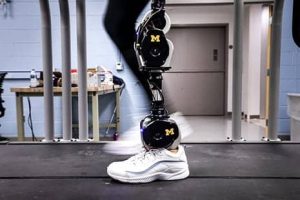
AI-Powered Prosthetic Legs: The Future of Personalized Mobility
How AI Is Transforming Prosthetic Leg Technology
Smart Sensors and Real-Time Adaptation
One of the most important features of AI-powered prosthetic legs is their ability to collect and interpret movement data. Modern devices can include sensors that monitor factors such as walking speed, pressure distribution, joint position, and changes in terrain.
Unlike traditional prosthetic legs that may require manual adjustments, AI-enabled systems can automatically respond to different situations. For example, a person walking on a flat surface, climbing stairs, or moving across uneven ground requires different levels of support and stability. AI technology allows the prosthetic leg to recognize these changes and adjust accordingly.
This creates a smoother and more natural movement pattern while reducing the physical effort required from the user. Over time, the system can continue learning from the user’s habits and preferences, improving performance with every step.
Machine Learning for Personalized Mobility
Machine learning is at the heart of AI-powered prosthetic development. These systems analyze thousands of movement patterns to understand how an individual walks, balances, and interacts with their environment.
Every person’s movement style is different. Factors such as height, weight, muscle strength, lifestyle, and daily activities influence how a prosthetic leg should function. AI allows devices to develop personalized responses instead of relying only on preset settings.
For an active user who enjoys hiking or sports, the prosthetic leg can learn to support more dynamic movements. For someone who primarily needs assistance with everyday walking, the system can prioritize comfort, stability, and energy efficiency.
The Benefits of AI-Powered Prosthetic Legs
Improved Comfort and Natural Movement
One of the biggest goals of advanced prosthetic technology is creating a more natural walking experience. Traditional prosthetics can sometimes feel mechanical because they do not always respond quickly to changes in movement. AI-powered designs aim to close this gap by allowing the device to predict and respond to the user’s intentions.
Improved responsiveness can help reduce strain on the remaining limb, hips, and lower back. A more balanced walking pattern may also increase comfort during longer periods of activity.
Greater Independence and Confidence
Mobility is about more than walking from one place to another. It affects independence, social participation, work opportunities, and overall quality of life. AI-powered prosthetic legs can give users greater confidence by allowing them to move through different environments with fewer limitations.
Advanced prosthetics may help users participate in activities that were previously challenging, including outdoor recreation, exercise, and daily tasks that require changes in movement. By adapting to the individual, these devices support a more active and independent lifestyle.
Enhanced Safety and Stability
Balance and stability are critical aspects of prosthetic use. Unexpected changes in terrain or movement can create challenges for users. AI systems can help address these issues by detecting movement patterns and making rapid adjustments.
For example, if a user begins walking downhill or encounters an uneven surface, an AI-powered prosthetic leg may adjust resistance and positioning to provide additional support. These capabilities can help users feel more secure in a variety of environments.
The Role of Robotics and Connected Technology
AI-powered prosthetic legs combine several fields of innovation, including robotics, biomechanics, and digital connectivity. Robotic components allow prosthetic joints to move more naturally, while AI algorithms determine how those movements should be controlled.
Many advanced prosthetics can also connect to software applications. These platforms may allow users and healthcare professionals to monitor performance, adjust settings, and track improvements over time. Remote updates and digital customization could make future prosthetic care more efficient and accessible.
Connected technology also opens opportunities for better collaboration between users, prosthetists, engineers, and medical professionals. Instead of relying only on occasional appointments, specialists may be able to analyze real-world performance data and make more informed recommendations.
Challenges Facing AI Prosthetic Development
Accessibility and Cost
Although AI-powered prosthetic legs offer exciting possibilities, accessibility remains a major challenge. Advanced technology often comes with higher development and manufacturing costs, which can make these devices difficult for some people to obtain.
Researchers and companies are working to make smart prosthetics more affordable and widely available. As technology improves and production expands, costs may decrease, allowing more people to benefit from these innovations.
Battery Life and Technical Limitations
AI-powered prosthetic systems require electronic components, sensors, and power sources. Battery performance remains an important area of development because users need reliable devices throughout their daily activities.
Engineers are exploring ways to create more efficient systems with longer battery life, improved durability, and lighter designs. Future advancements may make AI prosthetics easier to maintain and more practical for everyday use.
The Future of Personalized Mobility
The future of AI-powered prosthetic legs is focused on creating devices that work more naturally with the human body. As artificial intelligence becomes more advanced, prosthetics may become increasingly capable of predicting movement, adapting instantly, and providing personalized support.
Future innovations could include improved neural interfaces that allow users to control prosthetic devices more directly through signals from the nervous system. Researchers are also exploring technologies that could provide sensory feedback, allowing users to experience sensations such as pressure or contact with the ground.
These developments could bring prosthetic technology closer to recreating the experience of natural movement. While fully replicating a biological limb remains a complex challenge, AI is helping move the field closer to that goal.
Conclusion: A More Connected Future for Mobility
AI-powered prosthetic legs represent a powerful combination of medicine, engineering, and artificial intelligence. By learning from users and adapting to their needs, these technologies are changing how people experience mobility.
The future of personalized mobility is not simply about replacing a missing limb. It is about creating smarter, more responsive systems that help people move with greater freedom, comfort, and confidence. As AI technology continues to develop, prosthetic legs may become even more personalized, bringing new possibilities to millions of people around the world.